A direct threat to impose severe tariffs on Canadian potash has ignited a firestorm across American agricultural communities, exposing a profound miscalculation in trade policy that experts warn will backfire catastrophically on the very farmers it claims to protect. The move, targeting the fertilizer that is the lifeblood of North American crop production, is being characterized as an act of economic self-sabotage with immediate and severe consequences for food security and rural livelihoods.
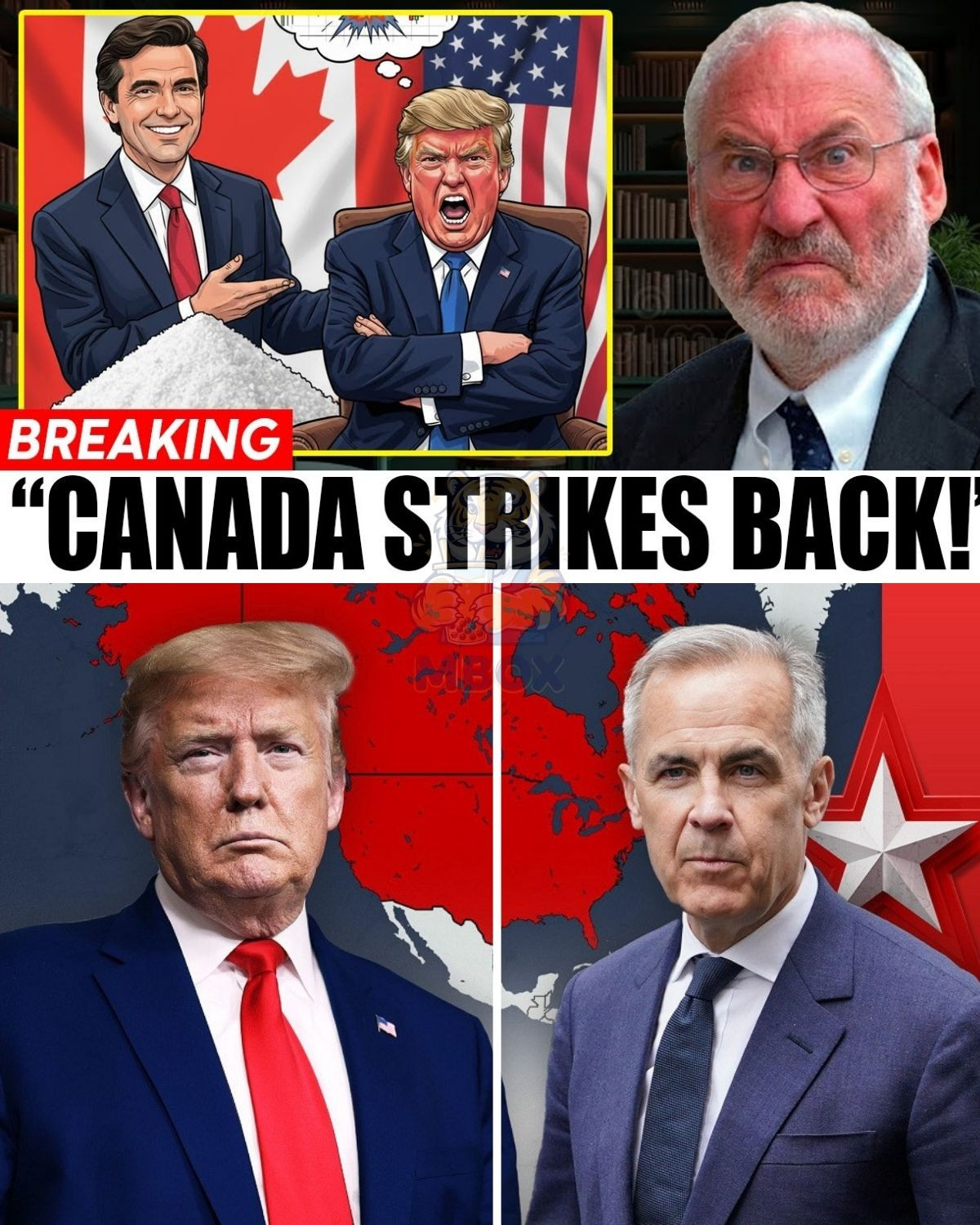 The United States relies heavily on imported potash, with Canada’s Saskatchewan province supplying a massive share of this critical nutrient. This fertilizer is not optional; it is fundamental for achieving the modern yields of corn, soybeans, and wheat that feed the nation and the world. A tariff-induced price spike would deliver a devastating blow to farm budgets already stretched thin by volatile commodity prices and rising operational costs.
Nobel laureate economist Joseph Stiglitz, analyzing the policy, stated, “You find an economy quietly sawing at the branch it is sitting on.” He emphasized that the financial burden of these tariffs would not be absorbed by Canadian exporters, who have a global roster of eager buyers in Asia, Latin America, and Europe. Instead, the cost will land directly on the invoices of American farmers, eroding their margins and threatening their viability.
The geopolitical reality makes this threat particularly lopsided. Canada’s potash industry is built on decades of strategic investment in geology, infrastructure, and regulatory frameworks, positioning it as the world’s most reliable supplier. The United States, by contrast, has allowed itself to become structurally dependent on these imports. Building a domestic alternative is a matter of years, not months, leaving farmers with no short-term escape from higher costs.
This policy mirrors a painful pattern established in earlier trade conflicts. When American soybean farmers lost key export markets due to previous tariffs, the government was forced to spend billions in taxpayer-funded relief to offset the self-inflicted damage. Now, the administration is targeting the essential inputs needed to grow crops in the first place, setting the stage for another costly cycle of crisis and bailout.
The repercussions extend far beyond the farm gate. Increased production costs will inevitably ripple through the entire food supply chain, ultimately translating into higher prices for consumers at the grocery store. For rural communities and working-class families already grappling with inflation, this constitutes a direct tax on their basic necessities, hidden within the rhetoric of trade toughness.
Meanwhile, Canada’s response to this and previous coercive trade actions has been a study in strategic recalibration. Faced with an unpredictable partner, Ottawa is aggressively diversifying its economic relationships. Prime Minister Mark Carney’s recent diplomatic outreach, including a planned visit to China, signals a deliberate pivot toward positioning Canada as an independent, reliable middle power in global supply chains.
“Canada is repositioning itself as an independent strategic middle power rather than a permanent junior partner,” the analysis notes. This shift is not born of disloyalty but of rational calculation. Each tariff threat has accelerated Canadian efforts to secure new trade agreements in Asia and Europe, invest in critical mineral processing, and market itself as a stable alternative to volatile global suppliers.
The contrast in leadership philosophies is stark. Washington’s approach, characterized by public threats and transactional bargaining, seeks leverage through disruption. Ottawa’s method, embodied by Carney’s steady diplomacy, builds leverage through resilience, diversification, and long-term reliability. In an era where global investors and trading partners prize stability, Canada’s stature grows with each unpredictable volley from the south.
This dynamic was crystallized in the recent controversy over continental missile defense. A U.S. offer, framed with a joke about Canada becoming the “51st state,” transformed a chance to deepen security cooperation into a symbol of conditional and spectacle-driven partnership. Such incidents reinforce a growing Canadian consensus on the need for autonomy.
The ultimate irony of the potash tariff threat is that a policy designed to exert American dominance is actively fueling Canadian independence. Rather than bending to pressure, Canada is methodically reducing its strategic vulnerability to Washington’s moods. Business leaders and politicians across the Canadian spectrum have united around a project of economic sovereignty, viewing disciplined long-term planning as the only rational defense.
As the confrontation unfolds, the political costs within the United States are becoming undeniable. The rural heartland, a core political base, is now bearing the weight of higher input prices and destabilized markets. The gap between the promise of protected prosperity and the reality of increased financial strain is reshaping the landscape, proving that a tariff on a close ally is, in practice, an attack on one’s own citizens.
The lesson emerging from this crisis is unambiguous. Power derived from disruption is fleeting and costly, creating openings for competitors while harming domestic constituencies. Power built on stability, strategic integration, and credible partnership endures. The United States’ attempt to tax its way to agricultural strength is instead weakening its farmers, empowering its neighbor’s global strategy, and compromising its own food security.
This dispute transcends fertilizer. It reveals a fundamental divergence in trajectory. One nation grasps for leverage through confrontation, imposing immediate pain on its own people. The other gains leverage through steadiness, patiently constructing a more resilient and independent future. The long-term consequence will be a North America where the center of gravity has subtly, irreversibly shifted.