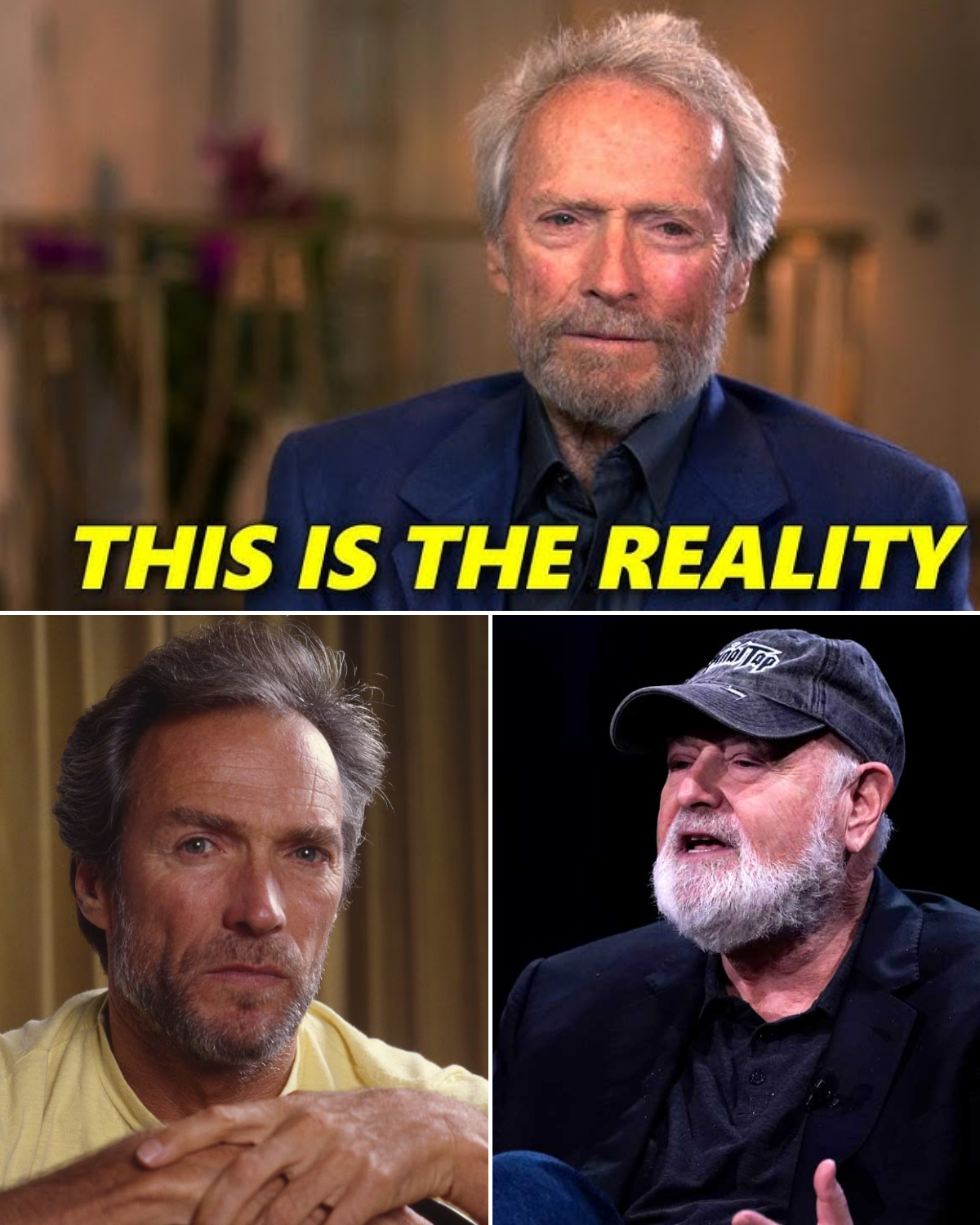
At 95, Clint Eastwood has finally broken his silence about filmmaker Rob Reiner, offering a candid reflection on Hollywood’s transformation. Speaking with a clarity that comes from decades of experience, Eastwood critiques the industry’s shift from storytelling to ideological conformity, emphasizing the importance of curiosity in art over moral certainty.
 On a sunny afternoon in Los Angeles, the air buzzed with anticipation as Eastwood, a cinematic titan, shared his thoughts. His voice, steady and measured, echoed a sentiment that many in the industry have felt but rarely articulated. Eastwood’s remarks were not merely personal grievances but a broader commentary on the changing landscape of filmmaking.
“I’ve never had a problem with Rob as a filmmaker,” Eastwood stated, acknowledging Reiner’s talent while expressing concern over what he perceives as a troubling trend in Hollywood. His words carried weight, as he lamented the loss of creative friction that once fueled artistic collaboration.
 The contrast between Eastwood’s philosophy and Reiner’s approach could not be starker. “Rob wants to win arguments,” he said, reflecting on the ideological battles that have come to dominate public discourse. Eastwood, in contrast, seeks to ask questions, to provoke thought rather than dictate beliefs.
As he spoke, the sun cast long shadows across the pavement, mirroring the deep reflections of a man who has witnessed the evolution of cinema. Eastwood emphasized that the heart of storytelling lies in its ability to unite rather than divide, a principle he feels has been overshadowed by moral superiority in recent years.

“You could disagree and still respect each other,” he recalled, his tone tinged with nostalgia for a bygone era. The Hollywood he described was one where diverse viewpoints coexisted, where artists thrived amidst creative differences rather than succumbed to pressures of conformity.
 Eastwood’s critique of the current state of Hollywood resonated with many young filmmakers present, who nodded in agreement. He expressed concern for a generation feeling stifled by the fear of misalignment with prevailing opinions. “They’re scared to be honest,” he said, a poignant observation that underscored the challenges facing new voices in the industry.
As he concluded, Eastwood’s calm demeanor belied the urgency of his message. “Life’s too short for grudges,” he stated, emphasizing the importance of legacy over accolades. His desire to create art that challenges audiences rather than placates them stood as a testament to his unwavering commitment to storytelling.
Eastwood’s reflections on Reiner and the industry at large serve as a clarion call for artists to reclaim their voices. In a world increasingly dominated by outrage, he champions the need for curiosity and genuine connection through film. For Clint Eastwood, this is not just a critique; it is a passionate plea to return to the roots of cinematic storytelling.


